


Falling in a Public Space: What to Document and How to Assess a Potential Claim
Did you fall on a street or in a public place? Here is how to document a hazard, witnesses, and injury, determine who is responsible, and explore additional avenues. The fall itself does not prove municipal liability.
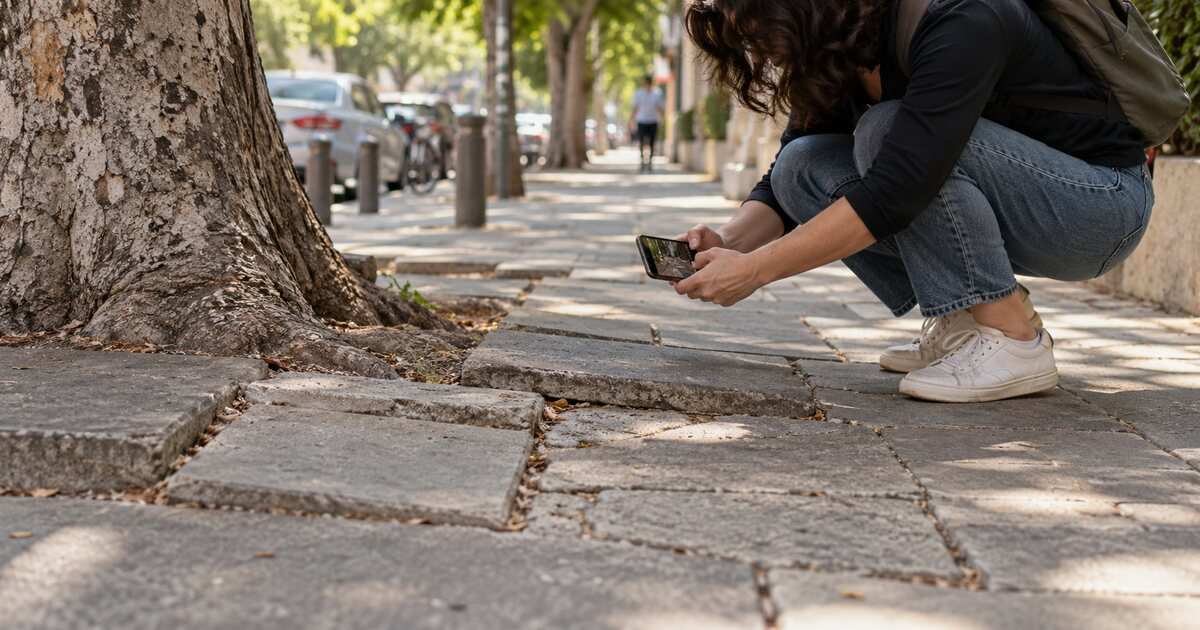
A fall on a street, in a park, or in a place open to the public does not, by itself, establish liability on the part of the municipality or the property owner. To assess the possibility of a compensation claim, you need to determine what caused the fall, who was responsible for that cause or area, whether a duty of care was breached, and what damage resulted.
Initial documentation is intended to preserve the facts before the scene changes and memory fades. Medical treatment and safety come before gathering material, and you can ask someone else to help when needed. This guide presents a practical approach to organizing information, based on official sources reviewed ahead of November 2026. It does not determine whether any particular fall justifies a claim.
Start with the cause of the fall and the identity of the potentially responsible party
The tort of negligence under the Civil Wrongs Ordinance concerns conduct that deviates from reasonable care in the circumstances and causes harm to a person to whom a duty of care is owed. When examining a fall, you must connect the alleged hazard, the act or omission attributed to the defendant, and the injury. Proving that you fell somewhere does not by itself answer all of these questions.
Therefore, begin by determining whether you can identify the cause of the fall: a pothole, an object, a substance on the floor, a change in level, or another circumstance. Then examine who controlled the location or created the risk. Depending on the facts, a local authority, a property occupier, a business, a contractor, or another party may be involved. The location being within the boundaries of a particular city is not sufficient to choose a defendant.
The condition of the area, how long it had existed, the discoverability of the risk, precautionary measures taken, and the conduct of those involved may all be relevant to the inquiry. No specific height of a defect or type of photograph guarantees liability in every situation. The assessment depends on the circumstances of the incident and the evidence that can be presented regarding them.
Photograph the hazard within its context
A close-up photograph can show a defect but cannot explain where it is located or how a pedestrian encountered it. It is advisable to keep several types of photographs, to the extent this can be done safely:
- A wide shot of the street, entrance, or path, with an identifiable landmark.
- A mid-range shot showing the hazard in relation to the walking route, the edges, and nearby crossings.
- A close-up of the condition itself, without moving objects or altering it for the photograph.
- Documentation of lighting, signage, fencing, or nearby works, to the extent they are relevant and visible at the scene.
Keep the original files alongside copies sent to others. Note who took the photographs and when, especially if they were taken after the incident. A photograph taken in daylight after a nighttime fall can help identify the location, but it should be noted that it does not document the lighting conditions at the time of the fall.
By way of illustration only, a photograph of a broken paving stone does not explain whether the person fell because of it or at a nearby spot. Marking the location of the fall on a separate copy, together with a description of the walking route, can assist in the inquiry. Keep the unmarked photograph as well, and distinguish between what it shows and the explanation you add.
Write a description and record witnesses without filling in gaps in memory
Write a brief description in your own words: where you came from, where you were going, what you felt or saw at the time of the fall, and what happened afterward. If you noticed the defect only after getting up, state that. When you do not know exactly why you fell, describe the uncertainty rather than asserting a cause you cannot explain.
If there were witnesses, ask for their contact details and ask what they themselves saw. A person who assisted after the fall can testify to what they found, even if they did not see the fall itself. Record that distinction. There is no need to draft a version for the witness or to suggest details they did not provide.
You may also add to the record the time of your conversation with the witness and the time you notified a family member or your employer. Such a notification may help reconstruct the sequence of events, but it is not a substitute for direct evidence of the hazard. Keep the correspondence in full, not just a single sentence from it.
Keep documentation of the injury separate from documentation of the scene
A medical document describes findings and treatment, while photographs of the scene concern the circumstances of the accident. To organize the connection between them, keep the documents from the first visit and follow-up appointments in chronological order. Give the medical team an accurate description of the circumstances of the injury, and do not ask them to determine legal liability for the condition of the scene.
In a separate file, collect receipts, absence certificates, income documents, and records of assistance that was actually required. Next to each item you may add a brief explanation: what was paid, who paid it, and the alleged connection to the injury. If a reimbursement was received, include that as well so that the financial picture is complete.
Do not infer from the severity of a photograph of the defect what the extent of the medical damage is, or from a medical document that liability for the hazard has been established. Estimating the amount of a claim also requires a separate basis. When the extent of the injury is still being determined, it is advisable for the record to note which tests or documents are still missing, without guessing at their results.
Report the risk and inquire about the preservation of camera footage
If a persistent hazard exists, you may report it to the body operating the location or to the relevant authority and keep a reference number. State the exact address and a factual description. A report aimed at correcting the risk is not the same as a compensation demand, and the closure of a report at a call center is not a decision on the question of liability for the fall.
For example, the Tel Aviv-Jaffa Municipality publishes reporting channels through the 106 Plus hotline and offers the option of requesting the preservation of footage from municipal cameras. This is an example of a local service; for another authority you need to check its own channel and rules. If cameras are nearby, it is worth inquiring promptly about how to request that footage be preserved, since you cannot assume it will be kept until you decide whether to file a claim.
A preservation request does not guarantee that suitable footage exists or that you will be able to obtain it directly. Keep the request and the response, and avoid publishing material about other people unnecessarily. For a formal inquiry you may consult the guide on contacting a public authority.
Organize your questions before making a compensation demand
Before submitting a monetary demand, prepare a brief document setting out the facts of the incident, the identity of the known parties, a list of the evidence, the alleged damage, and the details that have not yet been clarified. Ask that a distinction be made between acknowledgment of receipt of the submission and a substantive response. Keep a copy of every attachment, not just a screenshot of the sending notification.
At the same time, consider whether the circumstances of the fall call for a different avenue. A fall connected to work may justify examining work injury rights. In an accident that is neither a work accident nor a road accident, there may be a route for accident benefits through the National Insurance Institute, subject to eligibility conditions, functional status, medical examination, and other payments. Each avenue has its own deadlines and requirements, so do not wait for the municipality's response before examining them.
If legal review is needed and financing it is difficult, you may check eligibility for state legal aid. Eligibility depends, among other things, on the subject matter, the relevant entitlement, and the legal prospects. An organized file makes it possible to assess the viability of a claim and its costs on the basis of the existing material.
Sources and further reading
Sources are listed separately from the article body, each linking to the original.
-
Civil Wrongs Ordinance: Negligence provisions in the official legislation database ((opens in a new window))
www.gov.il
-
Tel Aviv-Jaffa Municipality: Reporting to the 106 Plus hotline and requesting footage preservation ((opens in a new window))
www.tel-aviv.gov.il
-
National Insurance Institute: Eligibility conditions for accident benefits ((opens in a new window))
www.btl.gov.il
-
Ministry of Justice: Conditions for applying for legal aid ((opens in a new window))
www.gov.il
Information on this site is a general introduction to legal topics and does not replace advice tailored to the circumstances of a case.