


Repairs in a Rented Apartment: How to Document a Fault and Contact the Landlord
A fault in a rented apartment requires documentation, notice to the landlord, and an assessment of responsibility and urgency. Here is how to prepare a clear demand, keep records, and consider the next step when a repair is delayed.
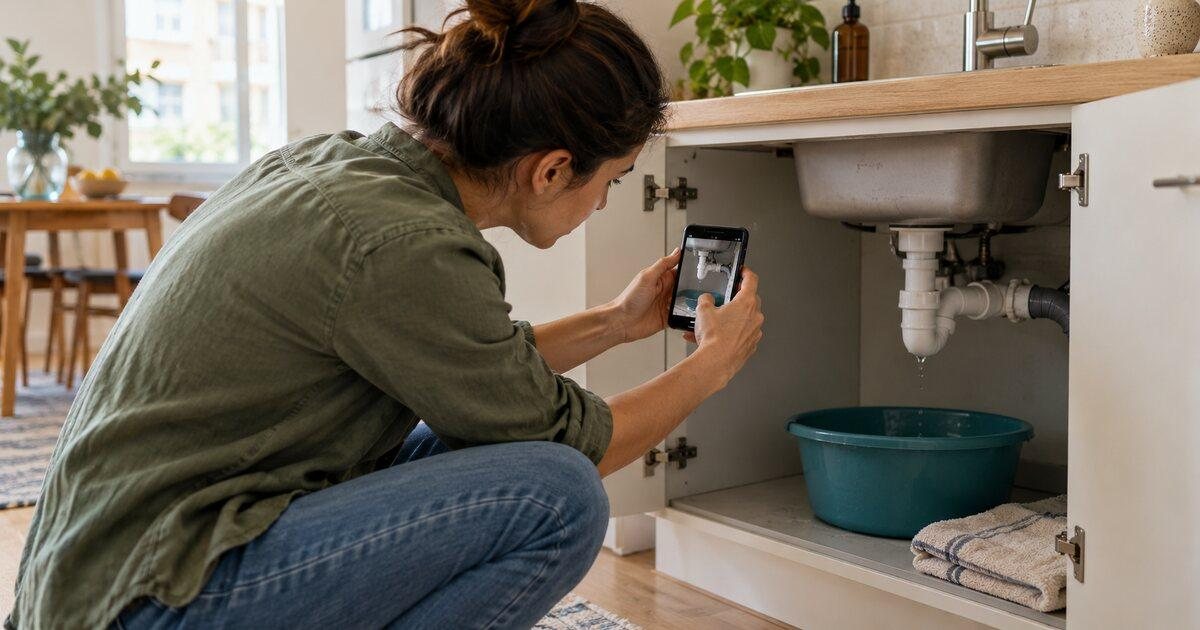
When a fault is discovered in a rented apartment, the first step is to clarify what happened, how it affects use of the apartment, and when notice was given to the landlord. Brief, organised documentation can advance a repair and also prevent a dispute over the source of the damage, the urgency, and the cost.
The information was reviewed on 2 November 2026 and relates primarily to residential tenancy agreements governed by the arrangement under the Rental and Loan Law. Special agreements and disputes over responsibility require examination according to the circumstances.
First check whether immediate action is required to protect people and property
Moisture near a socket, a smell of gas, or flooding are not matters that can wait for contractual correspondence. Contact the relevant emergency service or the qualified tradesperson appropriate to the situation, and avoid operating any system whose safety is in doubt. Do not enter a dangerous area in order to obtain a better photograph.
At the same time, to the extent safely possible, notify the landlord and document what you saw and what steps were taken. Distinguish between a step required to stop the danger and a permanent repair or upgrade. This distinction is important when it later becomes necessary to understand what was essential and what was chosen for reasons of convenience.
If the source of the hazard appears to be in the building or in another apartment, also notify the relevant party. Contacting the building committee does not necessarily replace the notice to the landlord, and contacting the landlord does not prevent dealing with the party that manages the shared system.
Describe the fault without determining in advance who is at fault
Under the residential tenancy arrangement, damage caused by the tenant's unreasonable use is distinguished from another defect that is not minor and that is the landlord's responsibility. Not every fault is wear and tear, and not every blockage indicates unreasonable use. A professional assessment is sometimes required.
It is advisable to start with the facts: when the fault appeared, where it is located, whether it has recurred in the past, and what happened shortly before it appeared. Compare with the handover protocol and the photographs saved at the start of the tenancy. If it was already noted that the window does not close, mention this rather than presenting it as a new fault.
Ask the tradesperson to separate, in their report, the finding, the probable cause, and the proposed solution. A general statement such as "a plumbing problem" does not explain whether the issue involves an old component, a localised blockage, or work carried out previously. Do not ask them to determine legal responsibility.
An effective notice includes a clear demand and coordination of access
Send notice by the method specified in the agreement, and preferably also through a written channel that can be saved. When notice was given by telephone, send a brief summary afterwards. Keep the entire exchange, including responses and proposals for coordination.
A useful notice will include:
- A description of the fault and its location in the apartment.
- The date it was discovered and photographs or a video as needed.
- The effect on living conditions and on use of the system.
- A demand for repair and a request to receive a date for attendance.
- Reasonable options for entry to the apartment and contact details.
Example wording: "Today a leak was discovered under the kitchen sink. The water returns even after drying, and the cabinet has become wet. Photographs are attached. I request that an inspection and repair be coordinated as soon as possible and that I be informed of who will attend and when. Entry is possible by prior arrangement during the hours attached."
This is a wording for illustration only. If the fault prevents reasonable habitation, write exactly what cannot be done; the heading "urgent" alone does not explain the urgency.
Understand the timeframe and the meaning of urgency
Under the relevant statutory arrangement, the landlord must repair a defect that is their responsibility within a reasonable time and within 30 days of receiving a demand. Where the defect does not allow reasonable habitation of the apartment, the limit is three days. These are maximum limits, and the circumstances may require earlier attention.
Also check whether the agreement sets out a more favourable commitment, such as a shorter time or a defined repair service. In the recommended municipal agreement of Tel Aviv-Jaffa, for example, there is an explicit division between reasonable wear and tear and damage that is the tenant's responsibility. This is a comparative tool; the applicability of a specific commitment depends on the agreement that was signed.
The conduct of both parties matters. Offer access times and keep documentation if a tradesperson did not attend. If the tenant does not allow a reasonable inspection, it will be more difficult to establish why the fault remained unaddressed.
When there is no repair, the next step is considered before spending money
Send a reminder that consolidates the date of the notice, the response given, and the current situation. Before independently commissioning work, obtain, as far as possible, a diagnosis and a detailed quote, and inform the landlord of the intention and the cost. Do not add improvement works that are not necessary to the remediation of the damage.
The law recognises, under certain conditions, self-repair and reimbursement of reasonable expenses, and in appropriate circumstances also a proportional reduction in rent. In a particularly urgent repair, an arrangement may apply that allows action without waiting. Entitlement depends on the conditions, the urgency, and the opportunity given to address the fault.
It should not be inferred from this that it is possible to automatically stop all rent payments. An excessive amount, a repair that was not necessary, or action taken without appropriate notice may create an additional dispute. Before offsetting, a significant reduction, or vacating the apartment, it is advisable to obtain advice based on the agreement and the evidence.
Prepare a file of documents that can be understood even after several months
Gather in one folder the agreement, the handover protocol, the notices, the photographs, and the professional documents. Attach invoices and payment confirmations, and add a line explaining what each expense was intended to resolve. Also keep quotes that were declined and a factual explanation for choosing a different quote.
Example for illustration only: A leak was repaired, but the cabinet was damaged. The file should distinguish between the cost of stopping the leak and the damage to the cabinet, and note who owns it. This allows the claims to be examined separately without counting the same expense twice.
After a tradesperson's visit, send a brief summary: what was inspected, what was repaired, and whether a problem remains. If the repair was unsuccessful, photograph the situation again and note that this is a continuation of the same fault. This way it is not necessary to reconstruct later whether the visit ended in a full repair or only a first attempt, and when the landlord was informed that further attention was required.
If a financial dispute remains, it is possible to check its suitability for a small claim and the documents required. Anyone who needs representation can check eligibility for state-funded legal aid, subject to the area and eligibility conditions. The routine of notices and repairs is worth arranging already when reviewing the tenancy agreement.
Sources and further reading
Sources are listed separately from the article body, each linking to the original.
-
Tenancy and Loan Law (Amendment), 2017 — Book of Laws ((opens in a new window))
fs.knesset.gov.il
-
Rental and Loan Law and its amendments — National Legislation Database ((opens in a new window))
main.knesset.gov.il
-
Recommended agreement with tips — Tel Aviv-Jaffa Municipality ((opens in a new window))
www.tel-aviv.gov.il
-
Application for legal aid — Ministry of Justice ((opens in a new window))
www.gov.il
Information on this site is a general introduction to legal topics and does not replace advice tailored to the circumstances of a case.